TPO Roofing: Materials, Installation Methods, Costs, and Maintenance
Dormer Solutions
|
November 5, 2026
Table Of Contents
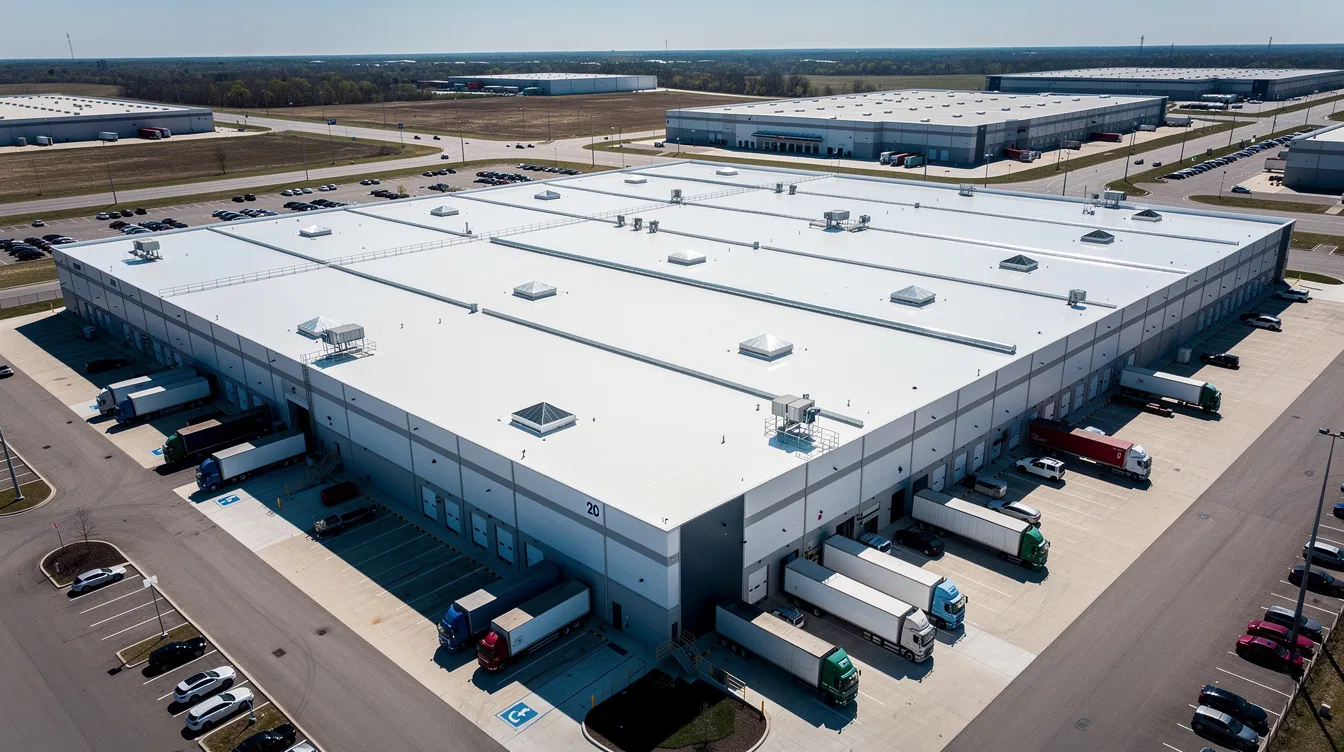
TPO roofing is one of the most widely installed single ply roofing membrane systems on commercial buildings across North America. If you manage or own a flat or low-slope commercial property, there is a strong chance you have encountered TPO as a recommended option – and for good reason.
This guide walks you through everything you need to know about TPO roofing systems, from how the membrane is made and installed to what it costs, how long it lasts, and how to keep it performing at its best.
TPO (thermoplastic polyolefin) is a single ply roofing membrane with heat welded seams that dominates the commercial roofing market due to its balance of affordability, energy performance, and durability. It is a cost effective, energy-efficient alternative to other commercial roofing materials like EPDM and PVC.
TPO roofing membranes are commonly white, meet key ASTM standards such as ASTM D6878, and can be fully adhered, mechanically attached, or induction welded. They are compatible with polyiso insulation and other approved substrates.
TPO roofing costs range from $3.00 to $9.00 per square foot for materials, with total installation costs of $8 to $14 per square foot depending on thickness, attachment method, and region. TPO roofing systems can last 20 to 30 years with proper maintenance.
Hail damage, UV exposure, and foot traffic are the primary durability considerations. Thicker membranes, high-density cover boards, and routine maintenance extend service life significantly.
The sections below walk property owners through roofing membrane options, installation methods, costs, maintenance schedules, and frequently asked questions in clear, practical language.
What Is TPO Roofing?
TPO stands for thermoplastic polyolefin. It is a single ply reflective roofing membrane widely used on flat commercial buildings and low slope roofs across the United States, Canada, and beyond. TPO is a single layer waterproofing system designed for commercial and industrial buildings where traditional steep-slope roofing materials are impractical.
TPO sheets consist of a synthetic thermoplastic blend – constructed from ethylene propylene rubber and polypropylene – reinforced with a polyester scrim that adds tensile strength and dimensional stability. This combination produces a tough, flexible waterproof layer that can handle the thermal movement and environmental stress common on large commercial roofs.
TPO roofing became common in North American commercial roofing in the late 1990s. Since then, billions of square feet have been installed on warehouses, retail centers, hospitals, and office buildings. Today, TPO is widely considered the leading single ply roofing membrane for new construction and reroof projects in the commercial sector.
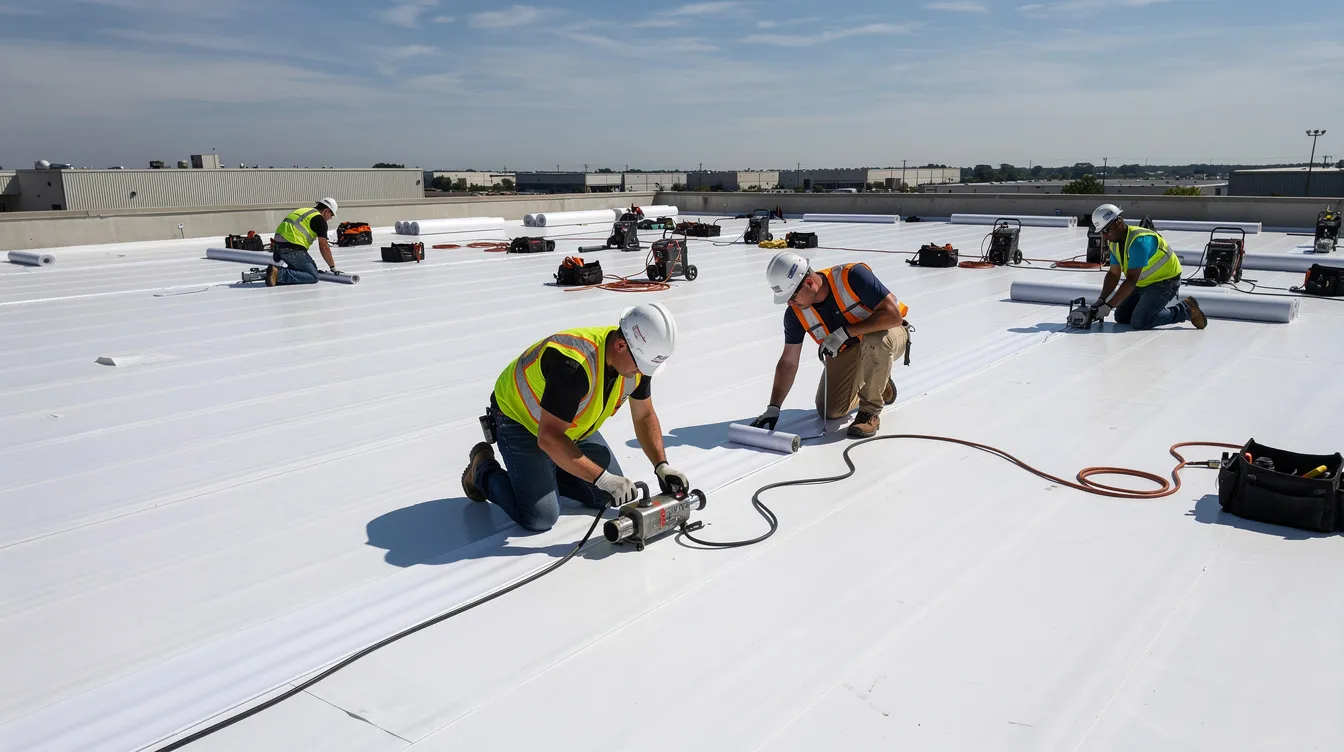
One of TPO’s defining features is that its seams are heat welded using hot-air equipment. Properly executed heat welded seams create a monolithic tpo roofing membrane that is actually stronger at the seam than in the membrane field itself. This is a meaningful advantage over adhesive-seamed systems where bond strength can degrade over time.
While white TPO is the most common color – chosen for its high reflectivity and energy efficiency – TPO is also available in tan and gray to match building design needs while still remaining highly reflective compared to dark-surfaced roofing materials.
How TPO Roofing Membranes Are Made and Classified
The manufacturing process for TPO roofing membranes begins with compounding thermoplastic resins. Polypropylene is blended with an ethylene-propylene interpolymer along with UV stabilizers, flame retardants, and fillers. A polyester scrim is then embedded within the polymer layers, providing the tear resistance and dimensional stability required for large-format roofing membranes.
A typical TPO sheet has three layers:
Top weathering layer: The exposed surface engineered to resist UV rays, heat, and precipitation.
Scrim-reinforced core: The central layer that provides superior strength, tear resistance, and controls elongation under wind or thermal stress.
Bottom layer: Designed for compatibility with bonding adhesive, fasteners, or induction-welded plates depending on the chosen attachment method.
TPO membranes are available in thicknesses of 45, 60, and 80 mils. Membrane thickness directly affects puncture resistance, tear strength, and expected service life. Thicker membranes generally qualify for longer manufacturer warranties – for example, 80-mil systems often support 25- to 30-year terms, while 45-mil is typically limited to 10–20 years.
Reputable TPO products are tested to ASTM standards such as ASTM D6878, which defines minimum requirements for breaking strength (ASTM D751), tearing strength, elongation, brittleness point, ozone resistance, and more. Higher-quality thermoplastic membranes often exceed these minimums by substantial margins, which becomes important for long-term durability in harsh climates with extreme weather, high UV intensity, or frequent hail.
TPO vs. Other Commercial Roofing Materials
TPO competes mainly with EPDM rubber and PVC in the single ply commercial roofing market. It also goes head-to-head with multi-ply systems like modified bitumen and built-up roofing on certain project types. Here is how they compare:
EPDM: A black synthetic rubber membrane with a long track record. EPDM can last up to 30 years or longer and performs well in cold climates. However, EPDM has lower solar reflectivity unless coated, and its seams are typically adhesively bonded rather than heat welded – which means seam integrity depends on adhesive performance rather than a fused thermoplastic bond.
PVC membrane: Another thermoplastic single ply membrane with heat welded seams and excellent chemical and grease resistance. PVC is generally more expensive than TPO at the material level, especially in thicker gauges. It is often the preferred choice for industrial buildings with exposure to oils, solvents, or kitchen grease. For general commercial applications without chemical exposure, TPO is often the more cost effective option.
Modified bitumen and built-up roofing (BUR): Multi-ply roofing systems that offer redundancy through multiple waterproof layers. They are heavier, slower to install, carry higher labor costs, and are generally less reflective than single ply membranes. TPO’s lighter weight and faster installation methods make it a practical alternative on most commercial projects.
TPO roofing is often more cost-effective compared to other single-ply systems while delivering high reflectivity, strong heat welded seams, and straightforward installation for large flat roofs. TPO is less expensive than many other commercial roofing materials, which is one reason it has captured such a large share of the market.
The trade-off: single ply membranes have less inherent redundancy than multi-ply systems. If a section of membrane or a seam fails, water intrusion can occur. This is why membrane thickness, cover boards, and quality installation matter so much.
Energy Efficiency, Reflectivity, and Cool Roof Benefits
White TPO roofing membranes are widely used as “cool roofs” in modern commercial roofing because they reflect sunlight rather than absorbing it. This seemingly simple property translates into measurable energy savings.
TPO roofing membranes reflect 80–90% of solar radiation, keeping roof surface temperatures dramatically lower than dark-surfaced roofing materials on hot, sunny days. This high solar reflectivity of TPO can significantly reduce cooling loads in hot climates.
Lower roof surface temperatures mean less heat transfers into the building. For large commercial buildings with substantial roof area, this can meaningfully reduce energy costs during the cooling season. TPO achieves high Solar Reflective Index ratings among roofing membranes, making it a straightforward way to reduce energy costs on buildings where air conditioning is a major expense.
Many TPO products meet or exceed recognized cool roof performance programs – including CRRC (Cool Roof Rating Council) listings and ENERGY STAR qualification – and can contribute to LEED credits or satisfy local energy code requirements depending on region.
Non-white TPO colors (tan, gray) offer somewhat lower reflectivity but may be selected for aesthetic reasons. Cool color technology can partially offset reflectivity loss, but white TPO remains the highest-performing option for energy efficiency.
Property owners should review local climate and utility rates when deciding which TPO color and reflectivity level make the most financial sense. In hot climates like Florida, Texas, or Arizona, the cooling savings from a highly reflective white TPO roof can be substantial.
Additionally, TPO is recyclable at the end of its lifecycle, which adds a sustainability advantage for property owners tracking environmental impact.
TPO Roofing Installation Methods
TPO can be installed using mechanically attached, adhered, or induction-welded methods. Each approach has distinct advantages depending on the roof deck, building height, local wind zone, and budget. Here is what each looks like in practice.
TPO installation starts with selecting one of three primary attachment systems. Mechanically fastened TPO is secured with screws and plates driven through the insulation board into the roof deck along the membrane overlap zones. Adjacent TPO sheets are then heat welded over the fastener plates to create a sealed, continuous surface. This method is generally the least expensive and fastest to install, making it common on large warehouse and retail projects. However, the fastener penetrations create more potential failure points and may offer less wind uplift resistance than adhered systems in high-wind zones.
Fully adhered TPO is glued directly to insulation with bonding adhesive applied to both the substrate and the back of the membrane. This creates a smooth, fully bonded surface with no exposed plates or fastener penetrations. The result is improved aesthetics, better wind uplift resistance, and less membrane billowing, but at a higher material and labor cost. Proper substrate preparation – ensuring the surface is clean, dry, and flat – is critical for adhesive bond strength.
Induction-welded TPO uses electromagnetic induction to fuse the membrane to specially coated metal plates that have been mechanically fastened to the deck type below. An induction heating tool bonds the membrane to these plates from above, eliminating exposed fastener penetrations at the membrane surface. This method reduces puncture risk and offers strong wind performance but requires specialized equipment and certified installers.
Ballasted assemblies – where the membrane is loose-laid and held down by stone or pavers – exist but are less common with TPO for most modern commercial roof designs.
The right installation method depends on deck type (steel, concrete, wood), building height and wind zone, warranty requirements, and budget. Experienced roofers will evaluate all of these factors before recommending an approach.
Insulation and Cover Boards Under TPO
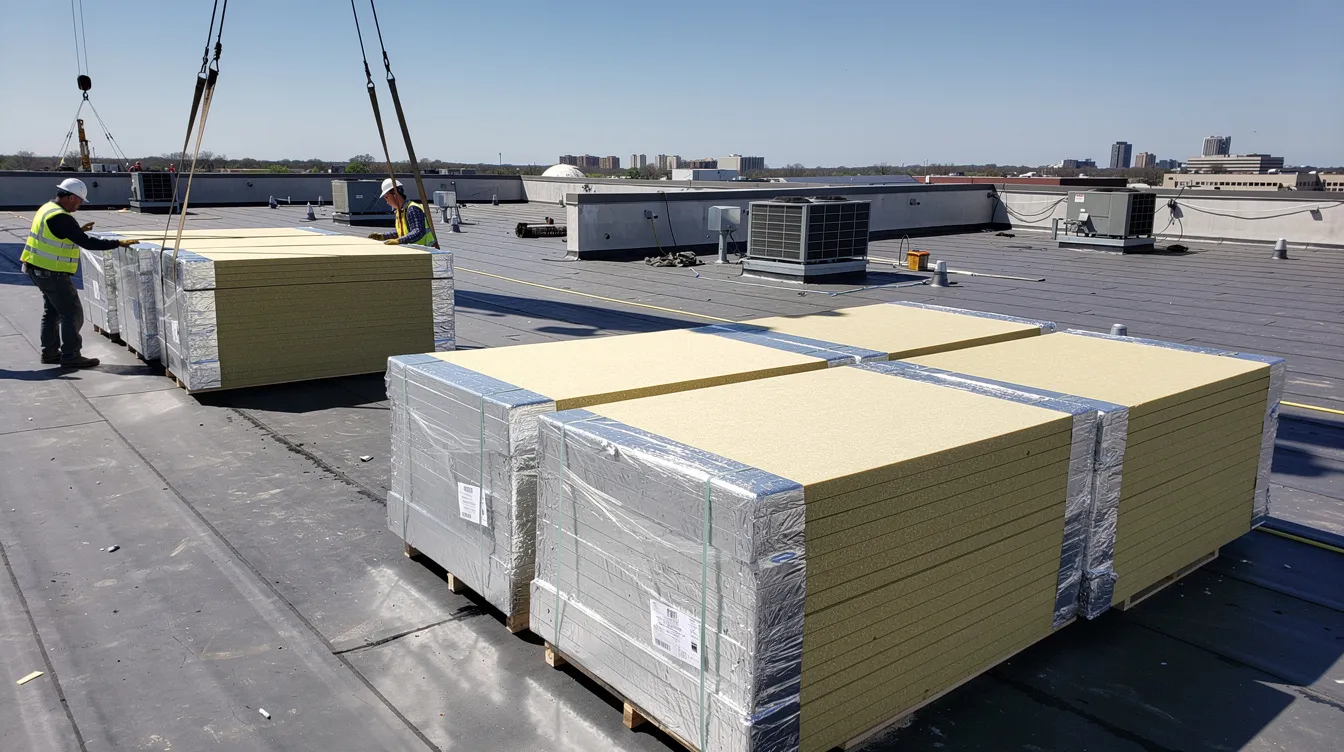
A TPO roofing membrane is only one component of a complete roofing system. The insulation and cover boards underneath are just as important for thermal performance, durability, and code compliance.
Polyiso insulation is the most common insulation board used under TPO. It delivers a high R-value per inch (approximately R-6 to R-6.5), is compatible with mechanically attached, fully adhered, and induction-welded assemblies, and can be tapered to create positive roof slope for drainage. Many modern energy codes require R-30 or higher continuous insulation above deck in colder climate zones, often achieved with multiple layers of polyiso insulation.
Expanded polystyrene (EPS) and extruded polystyrene (XPS) are alternative insulation options. EPS is less expensive but offers lower compressive strength and moisture resistance. XPS provides greater compressive strength and better water resistance at a higher price point. When using EPS or XPS under TPO, a separate high-density cover board is typically recommended to provide a smooth, durable substrate for the membrane.
High-density cover boards – such as gypsum board, fiber-cement, or high-density polyiso – serve multiple critical functions. They improve resistance to hail damage, protect against punctures from foot traffic and rooftop equipment, limit fastener pull-through under wind loads, and provide a better bonding surface for fully adhered systems. In hail-prone regions, the cover board is often the component that determines whether a storm damages the roofing system or not.
Correct insulation and cover board design enhances both energy efficiency and long-term roof performance. Skipping or under-specifying these layers to save cost is one of the most common mistakes in commercial roofing.
Common TPO Installation Details and Best Practices
Most long-term TPO roofing issues arise at details – seams, flashings, and penetrations – rather than in the flat field of the membrane. Getting these right is what separates a 25-year roof from a 10-year problem.
Seams: Correct hot-air welding temperature, travel speed, and seam width are essential. Experienced roofers perform test welds at the start of each workday and whenever ambient conditions change. Seam overlap distances, substrate flatness, and clean edge preparation all affect long-term seam integrity.
Parapet and wall flashings: The membrane should be turned up and over edges using preformed corners and prefabricated boots wherever possible. Field-fabricated shapes risk irregular cuts that can shrink or pull away over time – particularly with lower-quality TPO formulations subject to thermal movement.
Penetrations: Pipes, HVAC curbs, and drains should be flashed with prefabricated fittings and reinforced target patches, all heat-welded to the main membrane. Minimizing mechanical anchors at flashing edges reduces failure points.
Fully adhered systems: Consistent bonding adhesive coverage is critical. Air pockets or inadequate adhesive application can cause membrane detachments and billowing under high wind loads.
TPO installation must follow manufacturer detail drawings and NRCA/IBC requirements to maintain system warranties and code compliance. Cutting corners on details is the fastest route to roofing repairs down the road.
TPO Roofing Costs and Life Expectancy
Understanding cost requires looking beyond the material price per square foot. Here are realistic 2026 numbers for TPO roofing installed on a typical commercial building:
Cost Component
Range
TPO membrane material only
$3.00–$9.00 per square foot
Total installed cost (membrane + insulation + labor)
What drives cost variation? Membrane thickness and brand (Johns Manville, GAF, Carlisle, IKO, and others), insulation type and thickness, attachment method (mechanically fastened is usually cheapest; fully adhered and induction welded cost more), tear-off vs. recover, and local labor costs all factor in.
While TPO is one of the more cost-effective commercial roofing materials, very low bids often rely on thinner insulation, 45-mil membrane, or shortcuts on cover boards and flashings. These savings tend to cost more over time through earlier failures and more frequent roofing repairs.
TPO has a lifespan of 10 to 25 years for standard installations, and TPO roofing systems can last 20 to 30 years with proper maintenance when thicker membranes, robust cover boards, quality attachment, and regular inspections are part of the system. Premium systems with 80-mil membrane and strong detailing approach the longer end of that range.
Property owners should factor in total lifecycle cost – installation, energy savings, and maintenance – rather than just initial price per square foot.
Performance, Hail Damage, and Weather Resistance
TPO roofing is engineered to withstand wind uplift, UV exposure, and normal rooftop traffic when installed per tested assemblies. TPO is resistant to UV rays, punctures, and impacts, and it offers strong resistance to mold, algae, and moisture accumulation – factors that degrade other roofing membranes over time. In humid and storm-prone regions, TPO’s design addresses extreme weather challenges through heat welded seams, UV resistance, and tested wind uplift assemblies.
TPO roofs are engineered to withstand heavy rainfall and wind uplift. Wind uplift resistance depends heavily on the chosen installation method. Fully adhered and induction welded systems typically outperform mechanically attached assemblies in wind testing, assuming proper fastener spacing and plate size in all cases.
Hail damage is a critical concern in regions like Colorado, Texas, and the Midwest. In a Denver case following a May 2024 hailstorm, inspectors found that hail had cracked cover boards beneath the TPO membrane, causing moisture intrusion – not just surface bruising. The replacement system used a 60-mil TPO membrane mechanically fastened over polyiso insulation and a high-density cover board with a 20-year warranty. Some manufacturers now offer hail-rated TPO systems tested to FM Global’s Very Severe Hail standard, which are important in hail-prone areas.
Ponding water must still be avoided through proper slope design (minimum 1/4:12) and functioning drainage. Biological growth is rarely an issue on well-maintained TPO thanks to the membrane’s inherent resistance, but standing water and debris create conditions where algae can eventually take hold.
Property owners in severe-weather markets should request assemblies specifically tested for their region’s hail and wind exposure – not generic systems.
Maintenance, Cleaning, and Inspection of TPO Roofs
Even the best TPO system needs routine maintenance to reach its full service life and keep warranties valid. Neglecting maintenance is the fastest way to turn a 25-year roof into a 12-year problem.
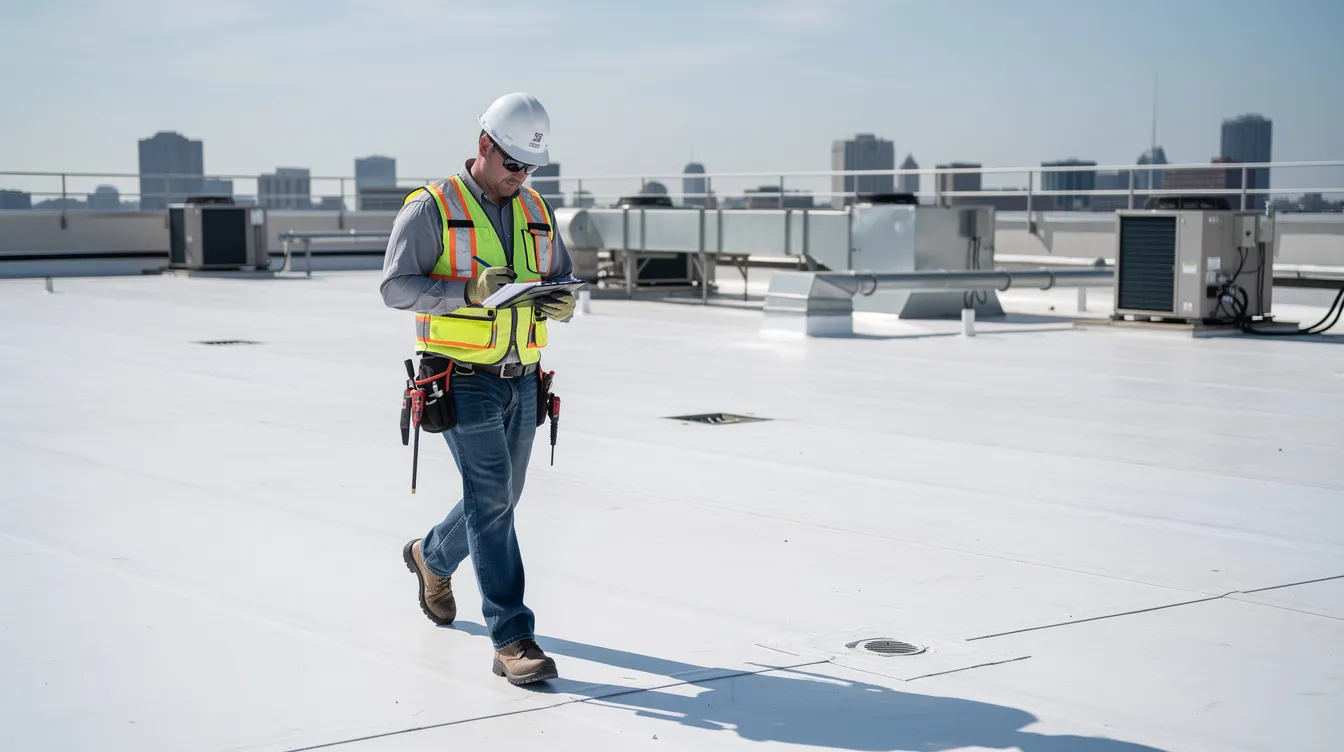
Inspection frequency: Inspect TPO roofs at least twice a year – typically in spring and fall. Perform inspections after severe weather events including hail, high wind, heavy snow, or any event that could damage the membrane. Additional inspections are needed after rooftop construction activity that might disturb flashings or the membrane surface.
What to look for: Seam separation or peeling, punctures or abrasions from foot traffic or debris, loose flashings around penetrations or rooftop equipment, clogged drains and scuppers, membrane discoloration, and biological growth such as algae or mold.
Cleaning: Clean TPO roofs regularly to maintain reflectivity. Use a floor broom or soft-bristle brush with manufacturer-approved cleaners to remove dirt and biological growth. Remove debris from TPO roofs to prevent water intrusion at drains and low points. Avoid harsh abrasives, unapproved solvents, or aggressive pressure washing that can damage the weathering layer or seams.
UV protection: TPO membranes are formulated with UV inhibitors during the manufacturing process and typically do not require separate UV protectant sprays or surface coatings when in good condition.
Repairs: Roofing repairs – especially seam re-welding and patching – should be performed by trained commercial roofing professionals using compatible TPO materials and hot-air equipment. Warranty conditions often require documented repairs and inspection records to retain coverage.
Annual maintenance costs for TPO roofs range from $300 to $500 for standard commercial systems, making ongoing care relatively affordable compared to the cost of premature replacement.
Codes, Standards, and Roof Slope Requirements
TPO roofing systems must comply with building codes and product standards – not just manufacturer literature. Understanding the basics helps property owners ask better questions of their roofing contractor.
Modern TPO membranes are evaluated under ASTM D6878 and related ASTM standards for tensile strength, tear resistance, UV resistance, ozone resistance, and weathering performance. Many TPO systems are also tested and listed for specific building codes, including International Building Code editions and state-specific codes, for wind, fire, and impact performance. Approvals from FM Global, UL, and Miami-Dade County (for High Velocity Hurricane Zones) provide additional assurance.
Typical slope requirements call for a minimum 1/4:12 slope on low slope roofs with thermoplastic single ply roofing to ensure positive drainage and prevent long-term ponding water. Fully adhered systems generally have no maximum slope limit, while mechanically attached or induction welded TPO may have manufacturer-imposed maximum slope recommendations to prevent sheet sliding from thermal movement.
Cool-roof related codes in many jurisdictions – including California Title 24 and Philadelphia’s green building code – require minimum aged solar reflectance and thermal emittance values. White TPO typically satisfies these requirements.
Property owners should verify that proposed TPO assemblies carry the necessary approvals for their jurisdiction, occupancy type, and deck type, including fire ratings and wind-uplift classifications.
When TPO Is the Right Choice for Property Owners
TPO roofing tends to be the strongest fit for large commercial roofs, warehouses, retail centers, and institutional buildings with low slope decks where cost effective installation and energy efficiency are top priorities.
Key decision points include:
Budget: TPO delivers strong performance at a lower price point than PVC membrane or multi-ply systems.
Energy costs: Buildings in hot, sunny climates – or markets with high electricity rates – see the greatest return from TPO’s ability to reflect sunlight and reduce energy costs.
Rooftop use: Properties with heavy foot traffic or dense rooftop equipment should specify 60-mil or 80-mil membrane, walk pads, and high-density cover boards.
Chemical exposure: If the building involves grease, oils, or chemical processing (restaurants, industrial kitchens), compare TPO carefully against PVC or other single ply membranes designed for that exposure.
Warranty goals: Thicker membranes and premium system assemblies support longer warranty terms – up to 25 or 30 years from some manufacturers.
Buildings in very cold climates or heavily industrial environments may benefit from comparing TPO against EPDM or PVC before committing. In most other scenarios, TPO delivers the best balance of cost, performance, and longevity for commercial buildings.
Work closely with qualified commercial roofing contractors to design a complete system – membrane, insulation, cover boards, and attachment method – that fits your specific building and budget. A well-specified TPO roof is an investment that pays for itself through lower energy bills, reduced maintenance, and decades of reliable waterproofing.
Frequently Asked Questions: TPO Roofing
How long does a TPO roof really last in normal commercial use?
Most modern TPO systems last roughly 20–30 years when installed to manufacturer specifications, paired with appropriate insulation and cover boards, and inspected at least twice per year. Premature failures are usually linked to poor TPO installation, lack of maintenance, or unusual chemical or heat exposure rather than the roofing membrane itself. Thinner 45-mil systems in harsh climates may see shorter service life toward the 10–15 year range.
Can TPO roofing be installed over an existing commercial roof?
Many TPO systems can be installed as a “recover” over sound existing roofs if the old membrane is dry, well-adhered, and compatible with new roofing materials and local codes. Building codes typically limit the number of existing roof layers – often one recover is permitted. Core cuts or moisture scans are needed before a recover to confirm insulation is not saturated. A recover avoids tear-off disposal costs but requires careful evaluation of the existing approved substrates.
Is TPO a good option for buildings with a lot of rooftop equipment and foot traffic?
TPO can perform well under heavier rooftop use when thicker single ply membranes (60-mil or 80-mil), dedicated walkway pads, and protective cover boards are included in the design. Owners with frequent rooftop access should plan dedicated traffic paths and schedule more frequent inspections to catch punctures or abrasions early before they lead to leaks.
Will a TPO roof help with interior comfort and noise?
TPO’s main comfort benefit is reducing solar heat gain through reflectivity, which can lower interior temperatures on upper floors during hot seasons. Noise control is more influenced by insulation type and thickness under the membrane than by the TPO sheet itself. A thick continuous insulation assembly improves both thermal and acoustic performance more than the membrane choice alone.
Can I coat or paint an aging TPO roof instead of replacing it?
Some older TPO roofs can be restored with compatible elastomeric roof coatings if the membrane is still well attached, seams are intact, and the insulation beneath is dry and structurally sound. However, not all TPO surfaces accept coatings easily – older formulations with weathered top layers may have adhesion problems. Surface preparation, primers, and manufacturer-specific guidelines are critical. Coating is generally considered a short-term extension rather than a long-term replacement for the membrane.
Ready to Upgrade Your Commercial Roof?
Choosing the right roofing system is one of the most important investments you will make for your property. Whether you are planning a full replacement, a recover project, or simply need an expert evaluation, a well-designed TPO roofing system offers the ideal balance of energy efficiency, long-term durability, and cost performance.
Don’t leave your building’s protection to chance—partner with experienced commercial roofing professionals who can help you select the exact membrane thickness, insulation, and attachment method tailored to your budget and local climate.
Choosing a modified bitumen roof for a commercial building requires understanding how its materials, installation methods, and maintenance requirements affect long-term performance, particularly in Houston’s demanding climate. Although modified bitumen…
Your roof absorbs more solar heat than any other surface on your building. In summer, a conventional dark roof can easily reach 175°F, forcing your cooling systems to work overtime…
For commercial property owners, modified bitumen roofing offers a durable waterproofing option for low-slope roofs exposed to foot traffic, weather, and temperature changes. Understanding its construction helps prevent expensive installation…